
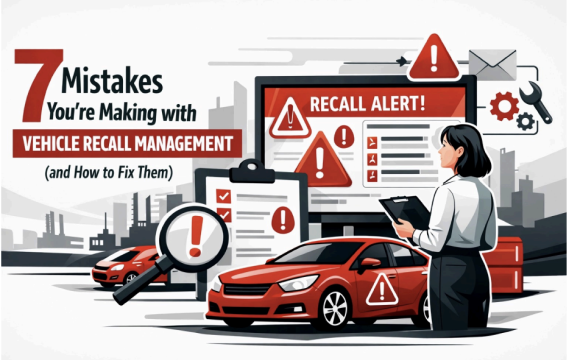
Vehicle recalls are costing your dealership money. Right now. Every day you struggle with manual tracking, inefficient scheduling, and inventory tie-ups, you’re leaving revenue on the table. The average dealership loses thousands of dollars monthly because of preventable recall management mistakes.
The good news? You can fix these problems faster than you think.
Let’s break down the seven most common vehicle recall management mistakes dealerships make: and the practical solutions that will transform your recall process from a headache into a profit center.
Mistake #1: Relying on Manual Recall Tracking
Your service team is drowning in spreadsheets. They’re manually checking VINs against OEM recall databases, updating Excel files, and hoping nothing slips through the cracks. This approach doesn’t scale, and it definitely doesn’t work when you’re managing hundreds of vehicles.
The Problem: Manual tracking creates gaps. Recalls get missed. Customers drive off with open safety issues. Your dealership faces liability exposure.
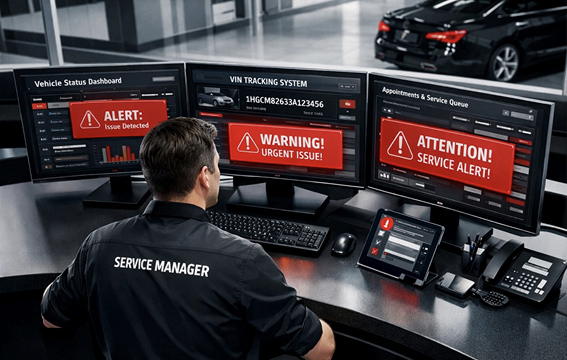
The Fix: Implement a live recall feed that automatically monitors your inventory 24/7. Trade Recalls provides real-time recall notifications that sync directly with your inventory management system. No more manual VIN checks. No more spreadsheets. Your team gets instant alerts the moment a recall hits any vehicle on your lot.
Mistake #2: Letting Inventory Sit with Open Recalls
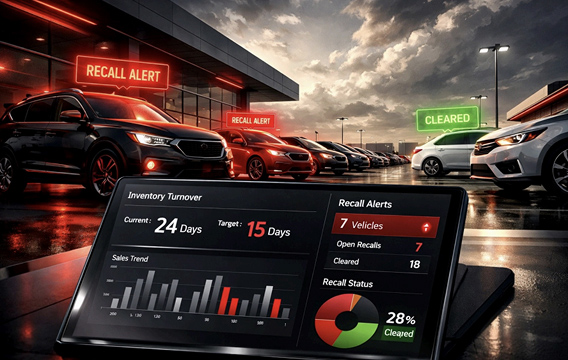
Here’s the painful truth: vehicles with open recalls are killing your cash flow. Precious lot space remains occupied. Interest payments continue. That $35,000 SUV sits unsold because of a $200 recall repair you haven’t scheduled yet.
Recent data shows dealerships lose an average of 15-30 days of inventory turnover time due to recall
delays. Multiply that across your entire lot, and you’re looking at significant revenue loss.
The Fix: Prioritize recall resolution before vehicles hit your sales floor. With Trade Recalls’ dealer-to-dealer recall network, you can coordinate repairs faster than ever. Find local dealers with available parts, schedule priority service slots, and move inventory through your pipeline without costly delays. The system connects you with other dealers facing similar challenges: turning competition into collaboration.
Mistake #3: Inefficient Service Scheduling That Wastes Every-one’s Time
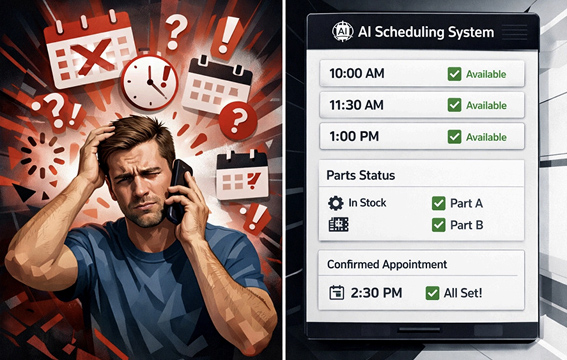
More than 20% of customers notified about recalls can’t find convenient repair appointments. Another 18% schedule appointments only to discover the required parts aren’t available. Your service department spends hours on phone tag, rescheduling, and damage control.
This inefficiency costs you twice: first in lost service revenue, second in damaged customer relationships.
The Fix: Streamline scheduling with AI-powered coordination. Trade Recalls’ AI receptionist service handles initial customer outreach, verifies parts availability, and books appointments when dealers actually have the components needed for repairs. The system confirms availability before any customer commitment happens. No more disappointed customers. No more wasted service bay time.
Mistake #4: Contacting the Wrong Customers (or the Same Ones Twice)
You’re spending marketing dollars reaching people who no longer own the vehicles in question. Or worse: you’re recontacting customers who already completed their recall repairs. Both scenarios damage your reputation and waste resources.
The average vehicle lifetime exceeds 12 years with multiple ownership changes. Your database gets stale fast.
The Fix: Cross-reference VINs against validated ownership records before every outreach campaign.
Integrate your recall solution with real-time data verification to ensure you’re reaching current owners. Track completed repairs in a centralized database accessible across your entire organization. One notification per customer. One accurate contact. Every time.
Mistake #5: No Visibility Into Parts Availability
Your customer arrives for their scheduled recall appointment. Your technician opens the work order. The parts aren’t there. You scramble to reschedule. The customer leaves frustrated. You’ve burned service capacity and gained nothing.
This scenario plays out in dealerships nationwide every single day.
The Fix: Coordinate parts availability before scheduling appointments. Use integrated systems that connect your service scheduling directly with parts inventory databases. Trade Recalls’ platform provides visibility into which dealers have parts in stock, enabling you to route customers to locations ready to complete repairs immediately.
Stop scheduling appointments you can’t fulfill.
Mistake #6: Operating in Isolation Instead of Leveraging Your Network
You’re treating recall management as a solo operation. Each dealership figures it out independently.
Parts sit unused at one location while another dealer desperately needs them. Service bays stay empty at dealership A while dealership B turns away appointments due to overload.
This fragmented approach costs the entire industry millions annually.
The Fix: Join a dealer-to-dealer recall network that enables resource sharing and collaboration. Trade Recalls created the first-of-its-kind network where dealers coordinate recalls across locations. Need a specific part? Find which nearby dealer has it. Have excess service capacity? Accept appointments from dealers who are booked solid. Transform isolated operations into an efficient, mutually beneficial ecosystem. Turn your competition into partners. Everyone wins.
Mistake #7: No System for Tracking Prior Repairs
Research shows that 12% of vehicles targeted in recall campaigns already completed the necessary repairs before notification. Your team wastes time and money contacting owners who don’t need your services. Your credibility takes a hit when customers receive unnecessary recall notices.
The Problem: Disconnected systems don’t communicate. Service departments can’t access complete repair histories. Marketing teams send notifications based on incomplete data.
The Fix: Implement integrated databases that verify repair completion across your entire operation before initiating customer contact. Maintain detailed service records accessible to every team member involved in recall management. Prevent wasted outreach. Protect your reputation. Ensure every customer interaction adds value.

The Bottom Line: Recall Management as Revenue Driver
Vehicle recalls don’t have to drain your resources. When you fix these seven common mistakes, you transform recall management from an operational burden into a profit opportunity.
You reduce inventory holding costs. You increase service revenue. You strengthen customer relationships. You protect your dealership from liability exposure.
Trade Recalls built solutions specifically to address these challenges. The platform combines live recall feeds, dealer-to-dealer coordination, AI-powered scheduling, and comprehensive tracking into one streamlined system designed for dealership operations.
Stop losing money to preventable recall management mistakes. Your competitors are already making these changes. The question isn’t whether you can afford to upgrade your recall management process: it’s whether you can afford not to.
Ready to see how much revenue you’re leaving on the table?
Get started with Trade Recalls and transform your recall management process today.